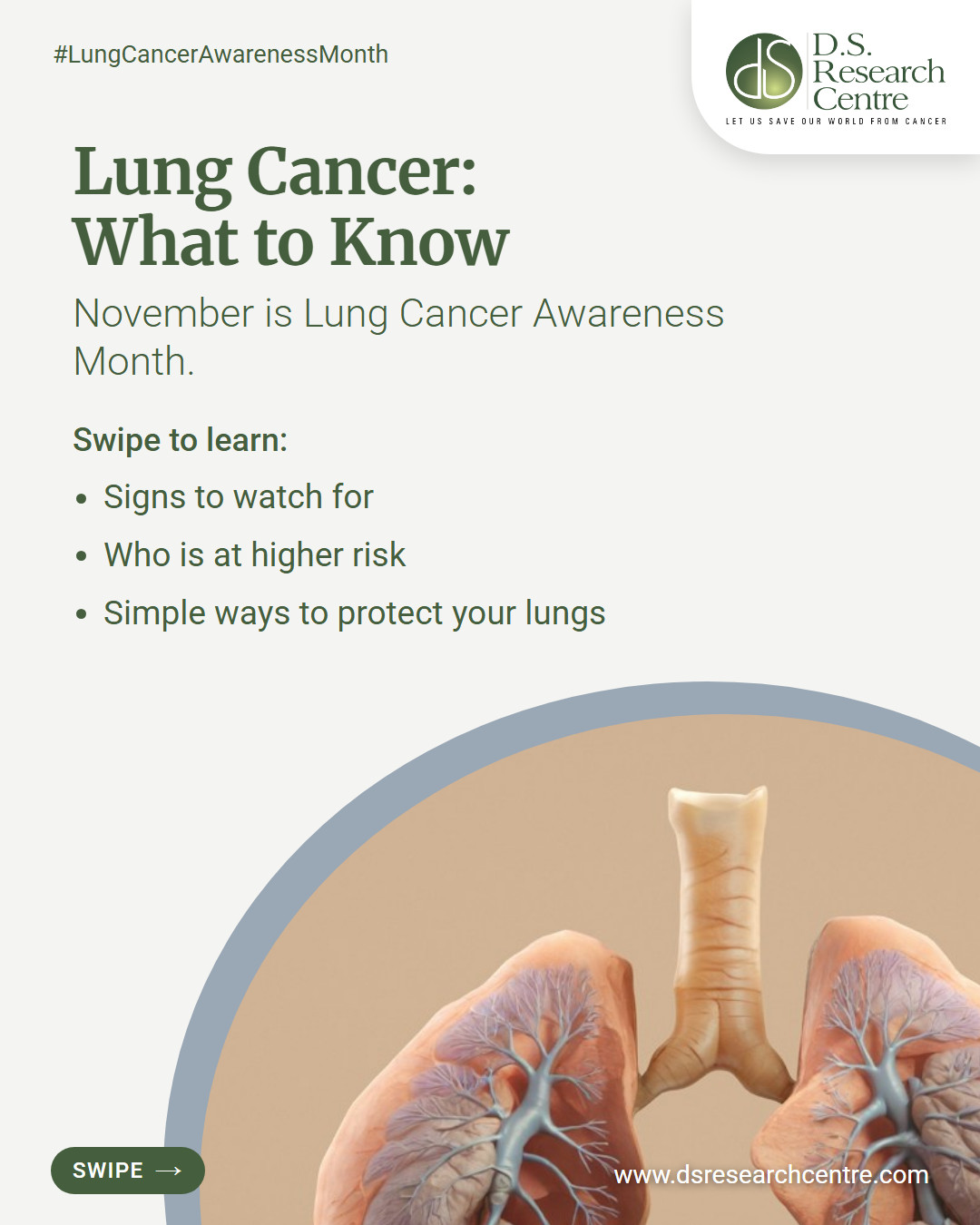
NOVEMBER: THE MONTH OF LUNG CANCER AWARENESS
Campaign Theme: Breathe Easy, Act Early: Spotlighting Survivorship & Saving Lives
OBJECTIVES OF THE CAMPAIGN
1. Raise Awareness: Educate the public on the realities of the disease, moving beyond stigma to facts.
2. Spotlight Survivorship: Highlight the challenges and triumphs of those living with and beyond lung cancer.
3. Reduce Associated Death: Emphasize early detection, screening, and smoking cessation to lower mortality rates.
4. Holistic Attention: Draw attention to all aspects of the disease—from prevention and diagnosis to treatment and palliative care.
WHAT IS LUNG CANCER?
Lung cancer begins in the lungs and may spread to lymph nodes or other organs in the body, such as the brain. Cancer from other organs also may spread to the lungs. When cancer cells spread from one organ to another, they are called metastases.
Did You Know?
- Lung cancer is the leading cause of cancer death worldwide.
- It is not just a "smoker’s disease"; genetic factors and environmental exposures (like radon and asbestos) play a significant role.
SIGNS AND SYMPTOMS
Lung cancer often presents silently in its early stages. Recognizing the signs is crucial for early intervention. There are two types of signs and symptoms:
1. Localized Symptoms (Involving the Lung)
These are symptoms caused by the tumor growing within the lung tissue:
- Persistent Cough: A cough that doesn't go away or gets worse over time.
- Breathing Problems: Shortness of breath or stridor (a high-pitched, wheezing sound when breathing).
- Change in Phlegm: Changes in the color or amount of mucus coughed up.
- Lung Infections: Frequent bouts of bronchitis or pneumonia.
- Hemoptysis: Coughing up blood (even small amounts).
- Hoarseness: A raspy or strained voice.
- Hiccups: Persistent, unexplained hiccups.
- Chest Pain & Tightness: Pain in the chest, shoulder, or back that worsens with deep breathing or laughing.
- Pleural Effusion: Fluid buildup around the lungs causing breathlessness.
- Superior Vena Cava Syndrome: Swelling in the face, neck, and upper chest (due to pressure on the large vein carrying blood to the heart).
> Note: If you experience these symptoms, please consult a healthcare professional immediately.
SPOTLIGHT ON SURVIVORSHIP
A lung cancer diagnosis does not mean a life stops—it means a new chapter begins.
The Reality of Survivorship:
- Stigma: Many survivors face the misconception that they "deserved" it due to smoking, which can lead to feelings of guilt and isolation.
- Quality of Life: Survivors deal with long-term side effects of treatment, including fatigue and respiratory issues. We must advocate for better rehabilitation programs.
- The Warrior Spirit: We celebrate the resilience of survivors who are advocating for research funding and better care.
How You Can Support a Survivor:
- Listen without judgment.
- Offer practical help (meals, rides to appointments).
- Share stories of hope to reduce the stigma.
REDUCING ASSOCIATED DEATH: ACTION STEPS
To achieve the goal of reducing deaths associated with lung cancer, we must focus on Screening and Prevention.
1. Early Detection (Screening)
The key to survival is catching it early. If you are a high-risk individual (e.g., heavy smoker aged 50-80), ask your doctor about Low-Dose CT Scans (LDCT) . This can detect cancer before symptoms appear, when it is most curable.
2. Prevention & Risk Reduction
- Quit Smoking: This is the single biggest risk reduction factor.
- Test for Radon: Ensure your home is tested for this radioactive gas.
- Workplace Safety: Protect against exposure to asbestos and carcinogens.
ALL ASPECTS OF THE DISEASE
We must draw attention to the full spectrum of the disease:
- Research: Need for funding for targeted therapies and immunotherapy.
- Mental Health: Addressing anxiety and depression in patients and their families.
- Financial Toxicity: Acknowledging the financial burden of cancer treatment.
- Palliative Care: Ensuring dignity and comfort for those in advanced stages.
CALL TO ACTION FOR NOVEMBER
- Wear White: Show solidarity with lung cancer patients and survivors.
- Share this Information: Knowledge saves lives. Share these symptoms with your network.
- Advocate: Encourage local representatives to support lung cancer research funding.
- Screen: If you are at risk, book a screening appointment today.
Let’s clear the air. Breathe easy, act early, and support survivorship.








Posted on April 15, 2016
Posted on April 15, 2016